
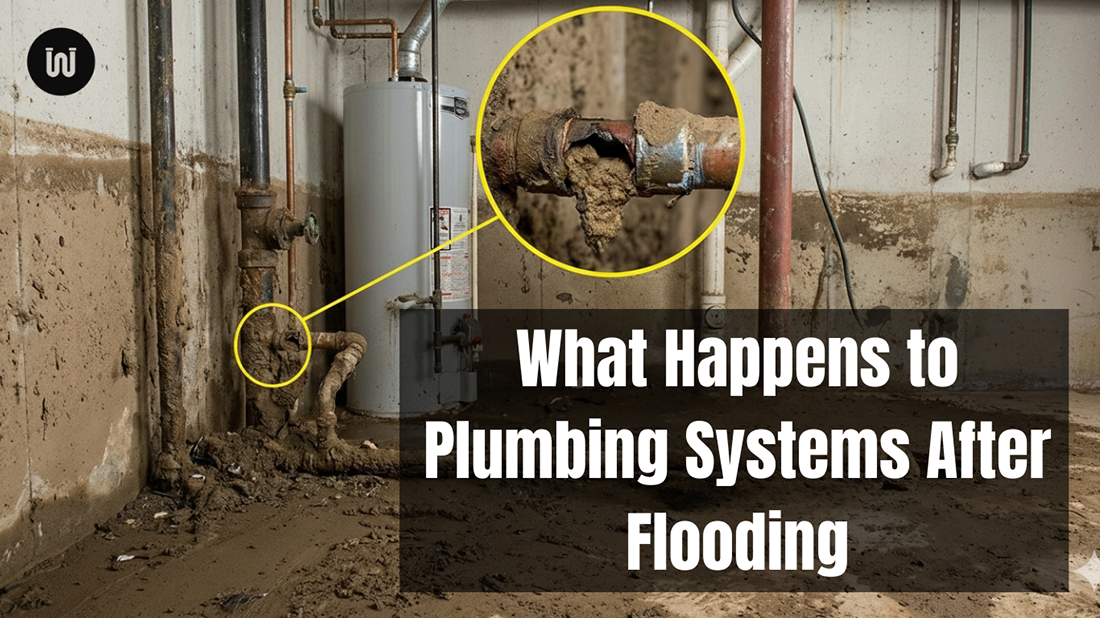
What Happens to Plumbing Systems After Flooding
When floodwaters recede, it’s easy to assume the risk has passed. Streets reopen, basements dry out, and systems appear to return to normal. But for plumbing and heating systems, the real impact of flooding often shows up after the water is gone.
Flooding places systems under unusual pressure – and those effects don’t always resolve on their own.
Floodwater Leaves More Than Moisture Behind
During flooding, plumbing and sewer systems can be exposed to:
- Sediment and debris
- Organic material
- Changes in pressure and flow direction
Even if fixtures seem to be working again, material left behind in pipes can restrict flow or create conditions for future backups.
Pressure Changes Can Stress System Components
Flooding can temporarily overwhelm drainage systems, forcing water to move in ways it normally wouldn’t. That added pressure can stress:
- Joints and connections
- Older piping materials
- Shared lines in multi-unit buildings
These stresses may not cause immediate failure, but they can contribute to issues weeks or months later.
Contamination Isn’t Always Visible
Floodwater can introduce contaminants into plumbing and sewer systems, particularly in lower levels and mechanical spaces. While surfaces may dry, internal systems can retain residue that affects performance and water quality.
This is one reason post-flood awareness matters – even when things appear back to normal.
Why “Drying Out” Isn’t the Same as Recovery
Drying out a space addresses visible damage, but plumbing systems often require deeper evaluation. Restoring reliable performance may involve:
- Clearing debris from sewer lines
- Verifying proper drainage and flow
- Addressing sediment buildup caused by flooding
Understanding system behavior after flooding helps reduce surprises down the road.
Awareness Is the First Step
Flooding doesn’t always cause immediate, obvious failures. But it can quietly change how systems perform over time. Paying attention after the water recedes – especially in lower levels, basements, and shared systems – supports safer, more reliable operation.
Prepared systems recover more steadily.
